
PAST EVENT

Raincoast Conservation Foundation is a team of conservationists and scientists empowered by our research to protect the lands, waters and wildlife of coastal British Columbia. We use rigorous, peer-reviewed science and community engagement to further our conservation objectives. We call this approach informed advocacy. As a charitable, non-profit conservation science organization that operates a research lab, land trust, research field station, and a research/sailing vessel, we are unique in Canada.
The Coexisting with Carnivores Alliance (CwCA) is a non-profit organization that promotes coexistence between people, bears, cougars and wolves on southern Vancouver Island, British Columbia. We support communities in reducing human-carnivore conflicts by helping them to find solutions and build capacity to share the landscape with carnivores and by promoting tolerance and appreciation of bears, cougars and wolves.
In the long term, we hope to foster a shift from conflict to coexistence, to build capacity and resources to effectively address human-wildlife interactions, and to develop a prototype that can be used by other communities within and beyond British Columbia.
The Wildlife Coexistence Lab is a group of researchers in the Faculty of Forestry at the University of British Columbia in Vancouver, Canada. Their research is focused on human-wildlife coexistence across multiple species and scales, with a particular emphasis on large-bodied terrestrial mammals. The lab is led by Dr. Cole Burton, Associate Professor in the Department of Forest Resources Management, and Canada Research Chair in Terrestrial Mammal Conservation.
This event is a collaborative educational initiative developed in partnership between Raincoast Conservation Foundation, Coexisting with Carnivores Alliance, the Wildlife Coexistence Lab at University of British Columbia, and Applied Conservation Science Lab at University of Victoria.
From wide-roaming carnivores to below-ground fungal networks, ecosystems are deeply connected. This connectivity means that when one element is disturbed or degraded, a cascade of effects can be felt throughout the system. To explore the landscape-level impacts of human decision-making, Raincoast Conservation Foundation, Coexisting with Carnivores Alliance, the Wildlife Coexistence Lab at University of British Columbia, and Applied Conservation Science Lab at University of Victoria collaborated to organize and facilitate weekly, virtual education sessions from May 12 – June 9, 2022 followed by this in person and online Solutions Session.
Educational series topics have ranged from the connection between carnivore conservation and climate action to the impacts of recreational activities on animal behavior and forest health. Leading ecologists, biologists, and other experts from across North America have contributed to this virtual series, though its operational focus is specific to the Coastal Douglas-fir (CDF) and Coastal Western Hemlock (CWH) ecosystems characteristic to Vancouver Island and other small pockets of coastal British Columbia.
The in-person and live-streamed Solutions Session invited policymakers, scientists and community members to gather for an afternoon-long thinktank aimed at strategizing for stronger environmental protection policy within the target ecosystems. It will open with a panel discussion featuring Deborah Curran, Lauren Eckert, and Chief Gordon Planes and moderated by Dr. Andy MacKinnon, followed by a think-tank session contributed to by all attendees. The session will end with a group discussion. The results of this in-person session will be synthesized and disseminated to local councils throughout the Capital Regional District.
The CDF biogeoclimatic zone is the smallest and most endangered of 16 such zones in BC. It is also among the least protected, and this protection consists mostly of small disconnected patches. The ecological communities within this zone are among the most biodiverse in BC, with some of the greatest carbon storage capacity, yet they are the most at risk of ongoing development. Its neighbouring zone, the CWH is now well-known across the country due to the ongoing destruction of iconic old growth forests making news headlines over the past year. These places are unraveling from former levels of diversity and abundance. We must work together toward local solutions.
Project TEACH has sought to inform and mobilize members from scientific, First Nation, and resident communities throughout the range of the CDF and CWH zones. Together, we have been learning about local conservation challenges and exploring pathways for mobilizing this knowledge to influence stronger environmental protections.
This series combines efforts across institutions, non-governmental organizations, and the community, creating opportunities for new relationships, increased knowledge sharing, and an improved support network. By making science accessible and providing opportunities to engage with experts and policy-makers. We hope that these sessions will empower community members to participate in local decision-making thus contributing to the “culture of conservation” our project partners are working together to encourage.
Watch the replay of the entire webinar series HERE
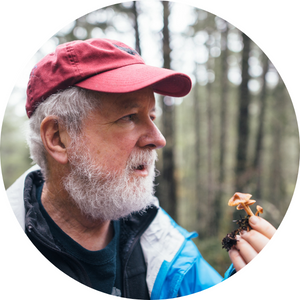
Andy MacKinnon (MSc, DSc) worked for 30 years as an ecologist with the Research Branch of the BC Ministry of Forests, Lands and Natural Resources. (MSc, DSc).
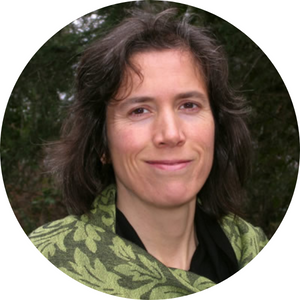
Deborah Curran, LLB, LLM, is associated with both the Faculty of Law and School of Environmental Studies (Faculty of Social Sciences) at the University of Victoria. She teaches in the areas of land and water regulation and law, including water law, municipal law, and the Environmental Law Clinic – Intensive course.
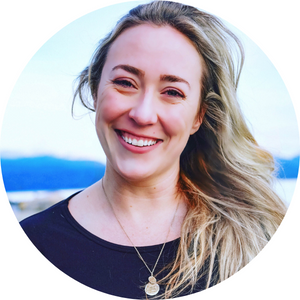
Lauren is a conservation scientist, PhD candidate, and Canada Vanier Scholar at the University of Victoria in addition to being a Raincoast Conservation Fellow and National Geographic Explorer. Her early research experiences around the globe exposed her to the complexities of interrelated social and ecological systems and motivated her to delve into conservation science that recognizes humans’ important role in global ecosystems, engages communities directly in conservation and supports Indigenous Nations and individuals reasserting their knowledge and rights.
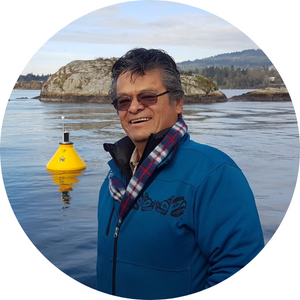
Chief Gordon Planes’ traditional name is HYA-QUATCHA, after his great grandfather from the Scia-new (CHEE-A-NEW) the salmon people. Elected Chief of the T’Sou-ke (SAA-UKE) Nation since 2008, he has worked as the Back Country Operations Manager of the West Coast Trail (Parks Canada). He is a Coast Salish carver, artist, traditional singer, & captain of the T’Sou-ke traditional dug-out canoes. Previously he had a3-year role working with his community to bringing back their Northern Straits SENĆOŦEN language. He & his wife Marcella reside in the village of Siaosun & have 6 children, 7 grandchildren & 1 greatgrandchild.
JOIN US ONLINE FOR THE WHOLE CONVERSATION!
We’re very excited to share that this event is being made available LIVE online so that you can join us from wherever you may be! These days most of us have big full lives, and are dealing with various commitments around family, time, money and work. Digitally, you’ll have the speakers, conversation & community – all from the comfort of your own home.
LISTEN. ANSWER. ASK. CONNECT!
You’re not watching – you’re PARTICIPATING! Through our easy online webinar system, you can engage with other viewers, participate in polls & discussions, and even ask questions during question periods. You certainly CAN choose to just sit back and watch & listen, if you like – your active participation isn’t an expectation, but it IS an opportunity.
NO FANCY TECHNOLOGY REQUIRED
There’s nothing to install, nothing to download, nothing to figure out. Here’s what you need to participate and have a great viewing experience!
> a modern internet browser (we recommend Chrome or Firefox)
> a reliable internet connection (hardwired is better than wifi)
> earbuds, headphones or good computer speakers